

Neck & Jawline: Why They Show Signs of Aging and What’s The Solution?
There’s a moment we all experience quietly. You catch your reflection in natural light. A photo is taken at an angle you didn’t expect. You notice softness where there was once definition.
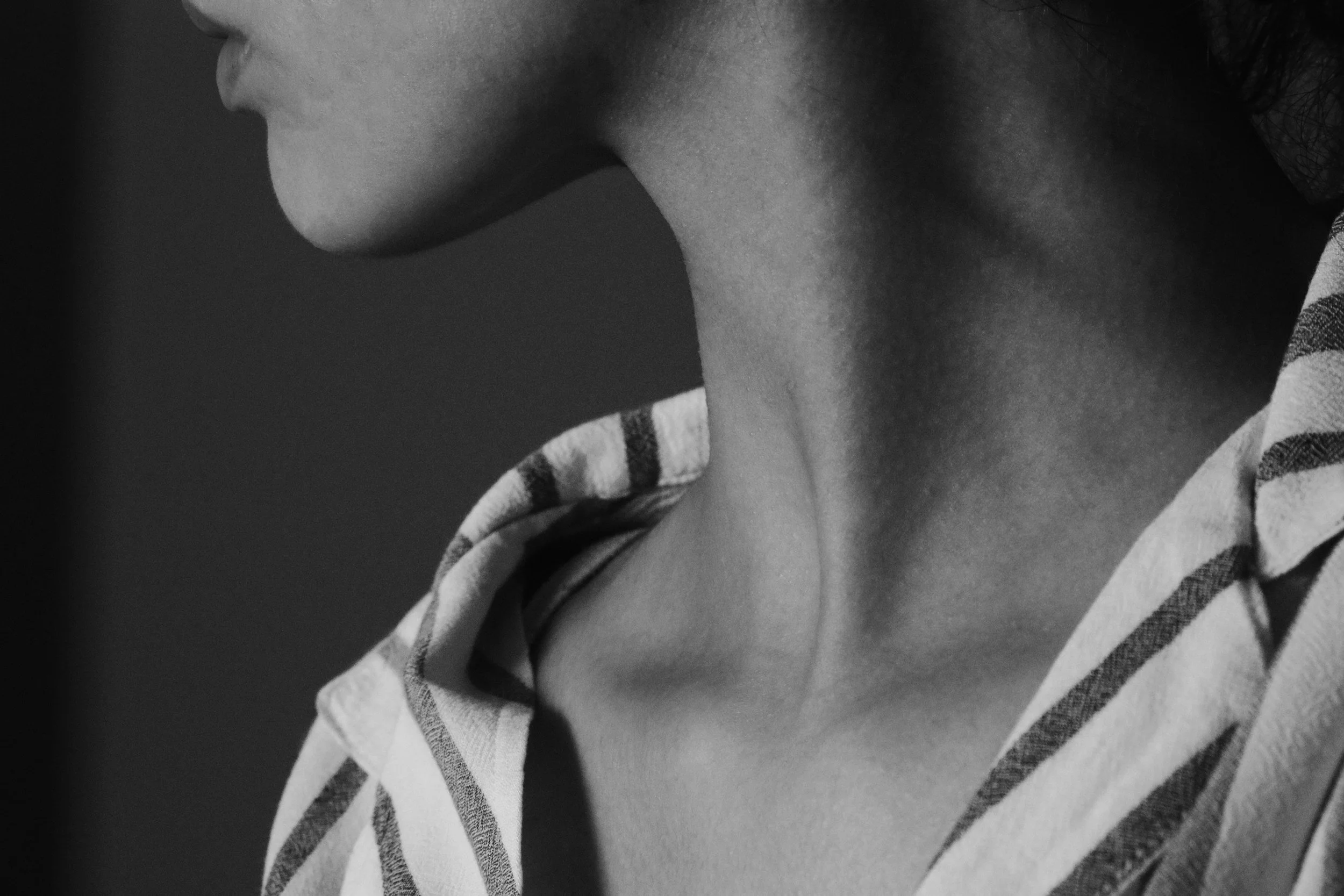
When most of us think about facial aging we tend to focus on the eyes or the mouth. Yet one of the earliest and most telling areas to show age are the neck and jawline. These areas quietly change long before we realize what’s happening, and by the time it becomes noticeable; it can feel sudden.
Understanding why the neck and jawline age first is the key to treating them effectively and naturally.
Let’s Uncover Why The Neck and Jawline Age.
The Skin Is Thinner, Less Support.
The skin along the neck and jawline is significantly thinner than the skin on the face. It contains fewer oil glands and less natural structural support, which means:
Collagen breaks down faster
Elasticity diminishes earlier
Fine lines and creases appear sooner
Collagen Loss is Subtle…Until It Becomes Noticable.
Collagen decline begins earlier than most of us realize, often in the late 20s and early 30s. Because the neck and jawline already lack density, this loss shows up here first. The subtle changes that occur in these areas often feels like “overnight aging” and is one of the most common and emotionally charges concerns we hear about.
Platysmal Bands: When the Neck Starts to Show Tension.
One of the most misunderstood signs of neck agins is the appearance of platysmal bands, the vertical lines of cords that become visible down the neck.
These bands aren’t wrinkles, but they contribute to the formation of the horizontal lines we often refer to as “necklace lines”. The platysmal muscle is a think, sheet-like muscle that runs from the chest up through the neck and insert onto the lower jawline.
As we age:
The platysmal muscle weakens and separates
Skin looses the ability to smooth over the muscle as it moves
Vertical bands become more noticeable, especially when speaking, smiling, and animating
Take a peek in the mirror and clinch your lower face or say the letter “E” with strong animation. Did you see any banding? For many patients, this is the moment when aging feels undeniable because the neck begins to look tense, strained, lax, or disconnected from the face. And no amount of neck cream can fix the muscle.
Facial Fat Pad Movement, Gravity & Environmental Factors.
The face is divided into thirds, the upper, middle and lower face. When we discuss aging and treatments to improve areas, we often speak of these areas independently to help explain how the aging of one area affects the next. As we lost volume in each third of the face, ligaments become weaker, and bone density decreases, each area is affected individually but also affect the areas above and below it.
When the midface begins to lose volume and our fat pads begin naturally to change position with age, we often see the effects from the midface in the lower face and jawline. These changes lead to lax skin in the jawline, a heavier appearance of the lower face, and causes the lower facial muscles to work a bit harder to support the changes.
Every time you talk, swallow, chew, look down for prolonged periods at your phone or computer, sniff or take deep breaths, the neck muscle is working. Add natural gravity to the mix and over time leads to
Blurred jawline
Heaviness beneath the chin
Skin that no longer feels firm or supported
Smoking, weight loss, poor protein intake, and sun exposure all play factors in how our skin ages often taking a toll on areas that are already naturally thinning like the neck and jawline.
Why Waiting Makes It Harder.
The neck and jawline don’t respond well “last minute” correction. Once deep laxity deepens and muscle-related changes become more pronounced, treatment options become less limited.
Early, thoughtful care allow us to:
Support collagen before it’s depleted
Address skin and muscle changes gently
Maintain natural contours without drastic intervention
The goal isn’t to turn back time, it’s to slow it down gently.
The Spindrift Aesthetic Philosophy.
At Spindrift Aesthetics, the approach to neck and jawline treatments are set with intention, restraint, and respect for your natural anatomy. We believe in supporting skin and structure, providing subtle tightening that looks effortless, and interventions that are attainable and achievable.
Non-invasive and non-surgical interventions include:
Injectables that support collagen and elastin support like Sculptra Aesthetic® and Radiesse®
Collagen induction therapy with SkinPen® Collagen Treatments
Microtox® treatments to help relax the platysmal banding
XERF® dual-radiofrequency non-invasive skin tightening treatments
When it comes to non-invasive treatments for the neck and jawline, setting realistic expectations is an essential part of the conversation. These technologies and treatments can deliver beautiful, natural refinement, but they are not meant to replace surgery in every situation.
At Spindrift Aesthetics, our role is to guide you honestly. If non-invasive options are not the best path to achieve your desired outcome, we believe it’s important to inform you of your treatment options. In some cases based on anatomy and extend or correction required, surgical intervention may offer a more complete or lasting result.
We maintain trusted relationships with respected local plastic surgeons and openly discuss referrals when that option aligns better with your goals, anatomy, and long-lasting satisfaction. Our priority is to never “sell” a treatment, it’s to ensure the approach chosen is the one that serves you best.
If This Feels Familiar.
If you’re noticing changes in your neck, jawline, or appearance of vertical bands, you’re not alone.
A personalized consultation can help you understand how to understand why these changes are happening and the corrective options that exists—both surgically and non-surgically.
Book Your Consultation to learn more about lower face aesthetic therapies!
Disclaimer
The information provided in this blog post is for general information purposes only and should not be considered medical advice. While we strive to provide accurate and up-to-date information, it is important to consult with a qualified healthcare professional before making any decisions regarding your health, treatments, or medical conditions. The content of this post is not intended to diagnose, treat, or cure any medical condition or concern. Individual results may vary, and all medical treatments should be discussed with your physician or specialist to determine what is best for your unique situation.